
The Mad Ophelias: Prologue
⧗ Sometime in the future.
A FEW WEEKS BEFORE THE PLANT EXPLODED, the local sheriff found a barefoot young woman in a hospital gown limping down the middle of the road nearby. It was pitch-dark out, a thick layer of clouds blotting out all the stars in the night sky. She was shivering in the autumn cold, hair shorn to where he could see the #MadOphelia tattoo inked on her scalp.
The woman carried what looked like a soccer ball made of clear plastic. It appeared heavy, not like it was filled with air, but water. A glistening, fleshy tube connected the ball to somewhere under her gown. The glare of his cruiser’s headlights illuminated what was inside the ball.
An unmistakable, curled-up fetus.
But what made him almost drop his flashlight when he got out of the cruiser was that the damn thing moved. It looked just like the holo-sonogram his wife’s daughter had sent of her grandson.
In the distance, he heard a whooping siren coming from the plant’s direction.
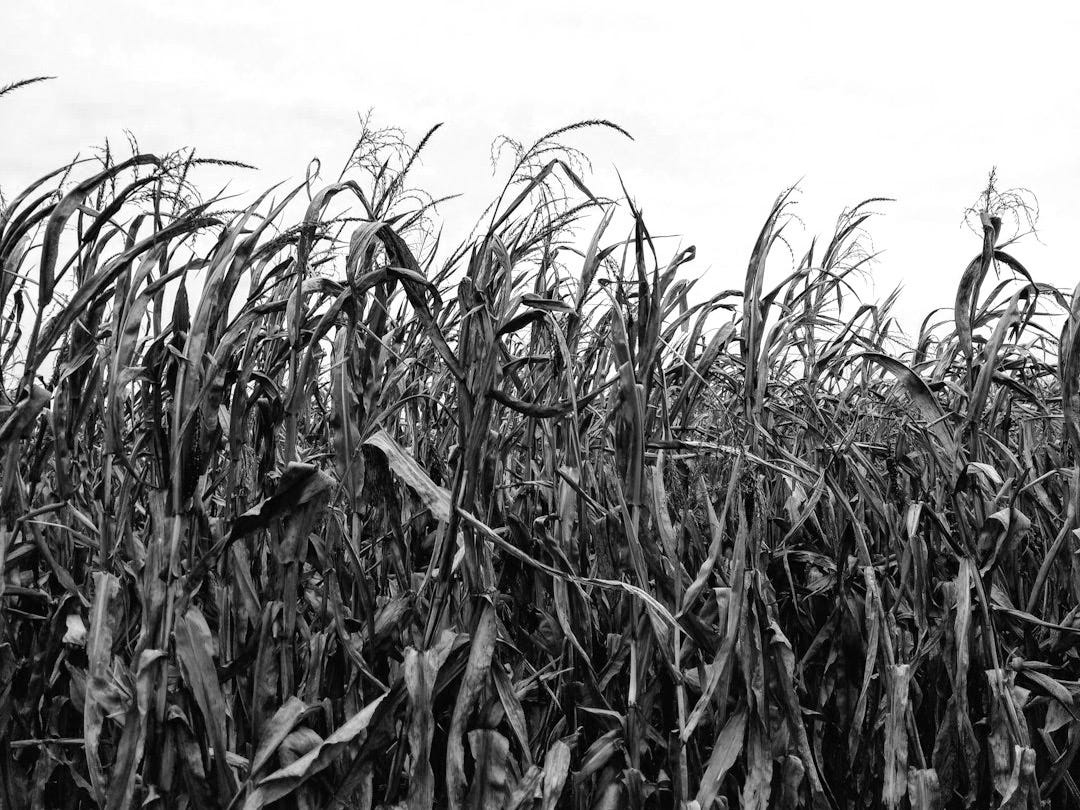
What the people inside the plant actually did, or even where they lived, was anyone’s guess. It was just a nondescript, two-story concrete building surrounded by a prison fence hunkered down in the middle of Alan’s old farm, fifteen miles outside of a town no one ever heard of.
Sometimes helicopters landed in the middle of the night. Sometimes anonymous white buses with darkened windows were seen skirting the edge of town on the new road no one else could use. When construction first got underway, there was hope that maybe it’d be a meatpacking plant, something that could offer steady work to the few lingering souls still trying to scratch out a living. It didn’t, but the name stuck.
The sheriff felt bad about the woman standing in the road but couldn’t afford the scrutiny. Not if he wanted to keep the life he was living.
So he called it in.
A black SUV with black-tinted windows came to collect her. Shortly after, he found $20K deposited into his bank account courtesy of the Heritage Security Corps.
And then one night he was shocked awake by a massive explosion so big that the walls of his ranch house shook and all the plates on the kitchen shelves emptied out onto the floor. He got his wife into the basement, and as he hurriedly dressed, a military helicopter buzzed overhead, which didn’t surprise him.
The five additional helicopters and sudden eruption of gunfire did. He heard the unmistakable jet-engine thrust of a Javelin missile, followed by another explosion, the screech of collapsing metal, and a thundering crash.
When he ran out of the house, he clocked the burning helicopter about two miles away. But it was a giant fire at the plant that cast the night sky an amber hue.
THEY ROUNDED UP ALL THE WOMEN in town the next morning, his wife included. Had to stand there, saying nothing. Holding back a rage like he could bite his own hand to the bone. The last time they took her, she lost twenty pounds and wouldn’t speak a word until a few months after her release. And never about what happened.
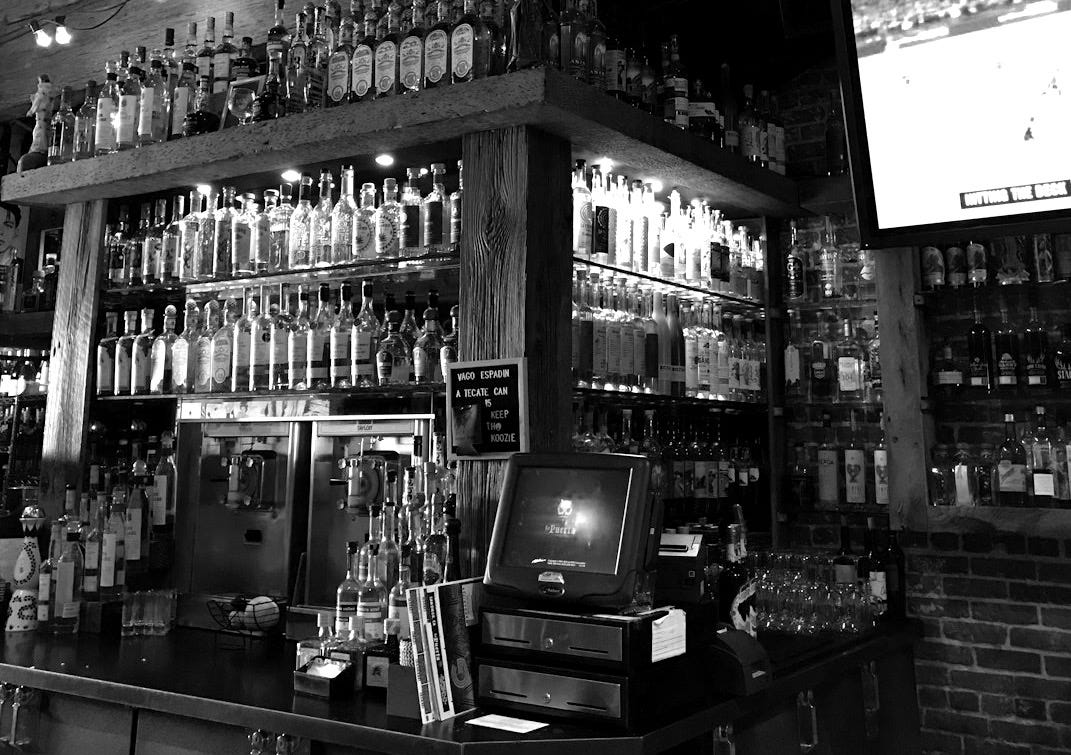
He couldn’t take the empty house, so he did the only thing he could, which was to go to Rusty’s. Technically, The Painted Lady, at least that’s what the weathered sign said, but everyone called it Rusty’s even though Rusty died years ago from prostate cancer and his scrawny grandson Hank, who didn’t know anything about running a bar, took over.
The place was empty except for Alan, who practically lived there. It was Alan who had sold his alfalfa farm to the Corps for an amount of money that let him pursue his first career choice—drinking. It wasn’t fair to blame him, but most people did.
The sheriff eased onto a wooden stool and leaned on the bar top with his forearms, staring at all the rings from all the drinks that had sweated there over the years. He liked the bar. He liked the dark, wood-paneled walls, the sticky yellow linoleum floor, the neon Budweiser sign where only the ‘Bud’ part still lit up, an old calendar from Buck’s feed store that was off a decade. A place that hadn’t changed.
Hank didn’t say anything and just opened a room-temperature bottle of beer, pushed it in his direction.
Alan came over and sat beside him, clapped a meaty paw on his shoulder. “They’ll be back before you know it.”
The sheriff lifted the bottle and guzzled it down, barely pausing to breathe. Pushed the empty across the counter and tapped his fingers on the bar for another.
What happened to the woman? The fetus?
Alan looked at Hank. “I got his tab.”
They watched a baseball game that dragged into nine innings, then ten. Tied by a combination of foul balls, deep counts and refusing to put the ball in play. The sheriff wanted to see some big hits. He wanted to see a ball go flying out over the outfielders and into the stands, a rush of fans jumping and shouting. He wanted something to feel good about—he didn’t give a damn which team won. Then it all ended with a bases-loaded walk and the teams knelt while they played Ye Faithful Republic.
The sheriff put his hand over his heart because that’s what you did now. He refused to learn the words.
“Four hours for that.” Alan got up from the stool. “I gotta take a piss.”
Hank changed the channel to the news just as the sheriff was thinking about calling it a night—an anchor talking about the explosion. A gas leak, they called it.
“Hey, that’s the plant.” Hank turned up the volume. Footage of a crumbling exterior wall illuminated by massive light towers that made everything look pale and chalky. A tragedy, said the Corps spokesperson. Our thoughts and prayers go out to the families.
“Bunch of bullshit.” The sheriff clenched and unclenched his fist. “Hank, I’m gonna need something harder.”
Hank put the remote down and pulled out a bottle of Smirnoff from under the bar and a vodka glass. Alan sat back down.
Somehow, Hank managed to spill while he poured. The sheriff took the glass and looked into the clear liquid as if some answer could be found there.
The Corps spokesperson was promising a full investigation into the cause of the gas leak. It’s critical that members of the faithful don’t jump to conclusions or spread seditious rumors.
“You think it was them?” Hank asked softly, which was surprising, because he rarely said a word. “The Mad Ophelias?”
Alan looked nervously at the door, like just saying their name would summon them.
The sheriff had heard the rumors. “You think an explosion from a gas leak way out here would be something that’d make the news?” He drank the vodka in one gulp, and the burning in his chest felt right, and honest. So he took the bottle and refilled his glass. It was stupid to say more, he knew that, but he was in the mood for being stupid. “And last time I checked, gas leaks don’t pull triggers.”
Hank and Alan went quiet. The sheriff ran his finger along a scratch in the wood. “I was first on scene. There was a gaping hole in that prison fence. Four Chinooks flying off. And on the ground, bodies. Plenty of bodies. All men. The ones who weren’t in pieces were finished off with a headshot.”
Alan leaned in. His breath smelled of alcohol and fried onions. “What did the Corps say when you called it in?”
“I didn’t.” The sheriff looked up at the 800 number on a laminated 11x17 poster with a lone cowboy silhouetted against a mountain. The one thing that was new. The one thing that was out of place. Together we protect the homeland. “Went home. Told them I was dead asleep and I wear earplugs at night ‘cause Helen snores.”
Hank’s hand started to tremble.
Out of an abundance of caution, said the anchor, we’d like to remind our viewers to report anything that might seem out of the ordinary. Especially as we approach the anniversary of—
“You know what? I think you’re just fucking with us.” Alan downed his vodka and slammed the glass on the bar. “They got ‘em all. Every last damn Mad Ophelia. It was just a gas leak. And I still gotta to take a piss.” He stood and lurched toward the bathroom, running his hand along the bar to keep steady. Took some fumbling with the knob for him to get the door open.
Hank seemed panicked. Too young to remember what it was like before, when shooting your mouth off couldn’t get you killed. The sheriff remembered. Wished he didn’t.
“He’s right, I’m just fucking with you.” The sheriff reached for the bottle, but it fell out of his hand and crashed onto the floor. Maybe she got away, the woman with the ball and the fetus. Maybe she was on that Chinook, flying away to someplace better. He tried to push himself off the stool to get the bottle, but the floor beneath his feet seemed to list and sway, like he was standing on the deck of a boat and the dark, roiling waters of an ocean were trying to pull him into its maw.
Hank drove him home.
WHAT THE SHERIFF didn’t say was that while the Corps searched his house top to bottom, they’d missed a loose floorboard which he’d found under the bed. Beneath was a red wig, a hard drive, and a detailed schematic of the plant.
He didn’t look at what was on the hard drive. Didn’t need to. He thought about what was happening to Helen. How she’d come back. Ribs visible under the skin.
So he let a few days pass. Then he buried it all in the backyard and laid out a concrete patio to cover it.
Screw the bastards.
© 2026 J. Lincoln Fenn. All rights reserved.
This is a work of fiction published as a serialized novel on Substack. No part of this work may be reproduced, reposted, or distributed in any form without the author’s prior written permission. First publication rights reserved by the author.
This feels way more locked in.
The floating fetus line, “The glare of his cruiser’s headlights illuminated what was inside the ball,” lands like a dart.
I love that it’s clear from the jump that the sheriff can be bought for a price and that he’s compromised. I believe in the original the money transaction was only hinted at.
Give me a compromised man with a badge, a glass of vodka in an old beat-up bar, and I’m yours. Thinking of Stephen King’s Desperation.
***Just read Iggy’s feedback, and not to give you conflicting feedback or argue with Iggy. The bar scene didn’t feel like it lingered to me. I am, however, partial to things set in bars and the goings-on inside them.
This version has more palpable social texture, feels more built out. Everything is more out in the open. Are all the new characters for texture and world-building in the prologue, or are some of them going to be incorporated into the narrative?
“Too young to remember what it was like before, when shooting your mouth off couldn’t get you killed.” What a great addition.
The one line I stumbled over was “Best not to think about it.” It called attention to itself, telling, not showing. Minor but noticeable. Everything that proceeds the line tells the reader this already.
This felt tighter and clearer than the original.
I really like this throwaway line, Alan’s old farm. I immediately wanted to go there. I could see it.
Looking forward to more.
Great stuff, this hits the spot! Really looking forward to Chapter 1.